


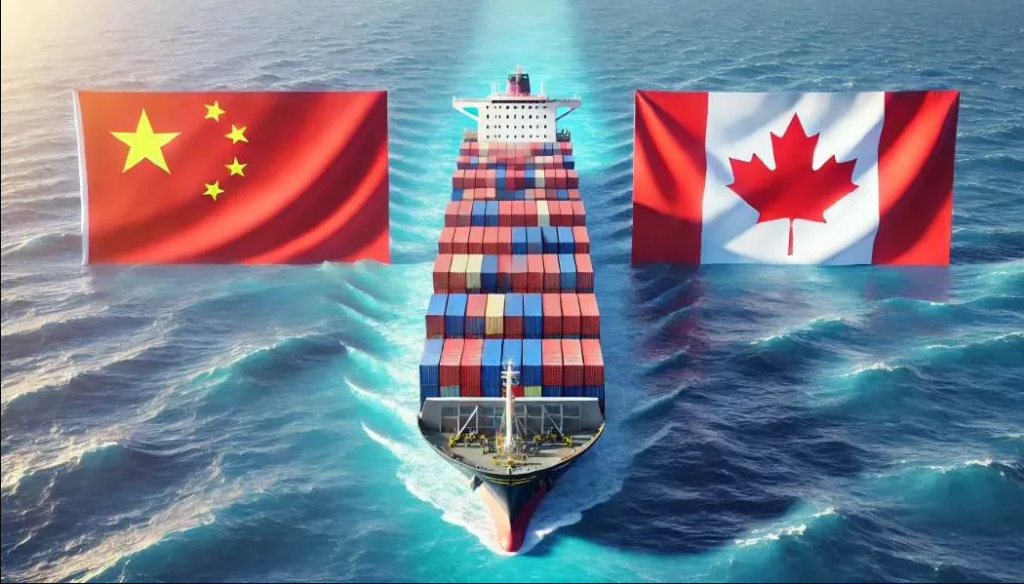
Introduction: A Trade Conflict Beyond Numbers
By the end of 2025, the tariff confrontation between Canada and China had evolved from a series of technical trade disputes into a broader geopolitical and economic standoff. While neither country is a global hegemon on the scale of the United States or China’s primary rivals, their conflict revealed how middle powers are increasingly drawn into the logic of economic warfare.
The Canada–China tariff war was not defined by dramatic headlines or sweeping embargoes. Instead, it unfolded through targeted restrictions, regulatory pressure, retaliatory tariffs, and diplomatic tension — quietly reshaping supply chains, domestic industries, and foreign policy priorities.
Origins of the Conflict: Politics Meets Trade
The roots of the Canada–China tariff war stretch back several years, but 2025 marked a clear escalation.
Strategic distrust
Relations between Ottawa and Beijing had already been strained by disagreements over national security, foreign interference concerns, human rights issues, and alignment with U.S. and G7 policies. Trade became the arena where these tensions materialized economically.
China increasingly viewed Canada not as a neutral trading partner, but as part of a broader Western bloc. Canada, for its part, began reassessing its exposure to Chinese markets, especially in strategic sectors.
From disputes to tariffs
By 2025, trade frictions translated into concrete measures:
- China imposed or expanded tariffs and informal barriers on Canadian agricultural exports
- Canada strengthened import controls, security screenings, and trade restrictions on selected Chinese goods
- Regulatory delays and inspections became tools of pressure on both sides
While both governments avoided calling it a “trade war,” the pattern was unmistakable.
Canada’s Economic Exposure: Agriculture and Resources at the Center
Agriculture under pressure
Canadian farmers were among the most directly affected. China had long been a major destination for Canadian exports such as:
- canola
- barley
- pork and beef products
- seafood
In 2025, tariffs, import suspensions, and administrative barriers reduced access to the Chinese market. Even temporary restrictions created uncertainty, lowered prices, and forced producers to seek alternative buyers.
For many agricultural exporters, the issue was not just lost revenue, but unpredictability — contracts became riskier, logistics more complex, and planning more difficult.
Energy and raw materials
Canada’s resource sector experienced mixed effects. While China continued to need raw materials, Beijing increasingly diversified suppliers to reduce dependence on politically sensitive partners.
This shift accelerated Canada’s efforts to redirect energy and resource exports toward allies in Asia-Pacific and Europe, though infrastructure limitations remained a challenge.
China’s Calculus: Leverage Without Escalation
China’s approach in the Canada tariff dispute was notably restrained compared to its confrontations with larger economies.
Targeted pressure
Rather than broad-based tariffs, Beijing relied on:
- selective import bans
- stricter compliance checks
- informal guidance to state-linked importers
This allowed China to apply economic pressure while maintaining plausible deniability and avoiding escalation that could provoke unified Western retaliation.
Signaling to middle powers
The dispute also carried a strategic message: alignment with Western security positions could carry economic costs. For China, Canada represented a test case — a way to signal resolve without triggering a full-scale trade confrontation.
Domestic Impact in Canada: Policy Shift and Strategic Rethinking
Supply chain diversification
One of the clearest outcomes of the 2025 tariff war was Canada’s accelerated push to diversify trade relationships. Ottawa increased efforts to strengthen economic ties with:
- the European Union
- Southeast Asia
- India
- Latin America
While diversification reduced long-term risk, it could not fully compensate for the scale and efficiency of Chinese demand in the short term.
Political consensus hardens
By the end of 2025, Canadian political discourse showed greater consensus around reducing strategic dependence on China. Trade policy increasingly overlapped with national security considerations, particularly in technology, critical minerals, and infrastructure.
Who Paid the Price?
As with most tariff conflicts, the costs were widely distributed.
- Canadian producers faced lost market access and price volatility
- Chinese importers and consumers paid higher prices or faced supply shortages
- Global supply chains became less efficient
- Diplomatic relations deteriorated further
Neither side achieved a decisive economic victory. Instead, both absorbed costs to defend strategic positions.
Global Context: A Fragmenting Trade System
The Canada–China tariff war cannot be understood in isolation. It unfolded within a global environment marked by:
- rising protectionism
- geopolitical alignment of trade
- increased use of economic tools for political signaling
For middle powers like Canada, this environment narrowed room for neutrality. Economic policy became inseparable from alliance politics.
The End of 2025: De-escalation Without Resolution
By late 2025, the tone between Ottawa and Beijing softened slightly, but fundamental issues remained unresolved.
- No comprehensive trade normalization occurred
- Tariffs and restrictions remained in place
- Dialogue focused on “risk management” rather than reconciliation
The conflict shifted from escalation to containment.
What Comes Next in 2026?
Looking ahead, several scenarios are likely:
- Managed tension — limited trade continues under higher risk premiums
- Sector-specific deals — partial reopening of markets for select goods
- Long-term decoupling — gradual reduction of mutual dependence
The most probable outcome is a controlled, uneasy coexistence — trade without trust.
Conclusion: A Quiet but Lasting Shift
The Canada–China tariff war of 2025 did not dominate headlines like U.S.–China tensions, but its significance should not be underestimated. It demonstrated how economic conflict now reaches beyond superpowers and affects countries navigating between values, alliances, and markets.
For Canada, the conflict accelerated a strategic reassessment of trade dependence. For China, it reinforced a playbook of calibrated economic pressure. For the global economy, it added another fracture line in an already fragmented system.
The lesson of 2025 is clear: in the modern world, even mid-sized economies cannot separate trade from geopolitics — and tariffs are no longer just economic tools, but instruments of strategy.
